Wiring guides. Pickup simulations. Tools.
For musicians who make things.
Started with a question about pickups. Ended with a circuit topology nobody’s documented for bass.
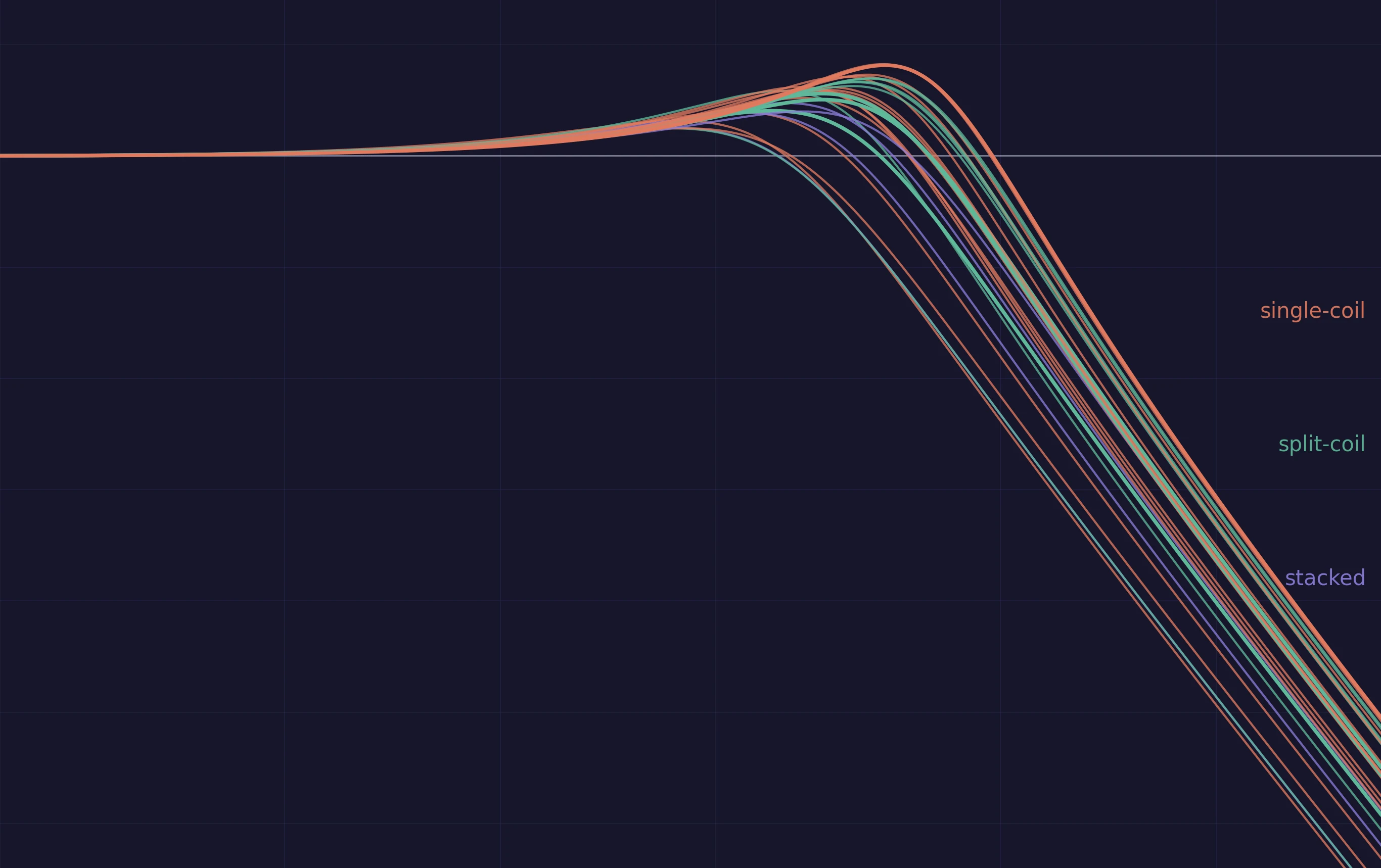
I Simulated 29 Jazz Bass Pickups So I Wouldn't Have to Buy Them All
Python pickup simulator ranks 29 Jazz Bass pickups by brightness. Seven with measured RLC data, the rest estimated. DC resistance is the wrong number. Inductance predicts tone.
Read →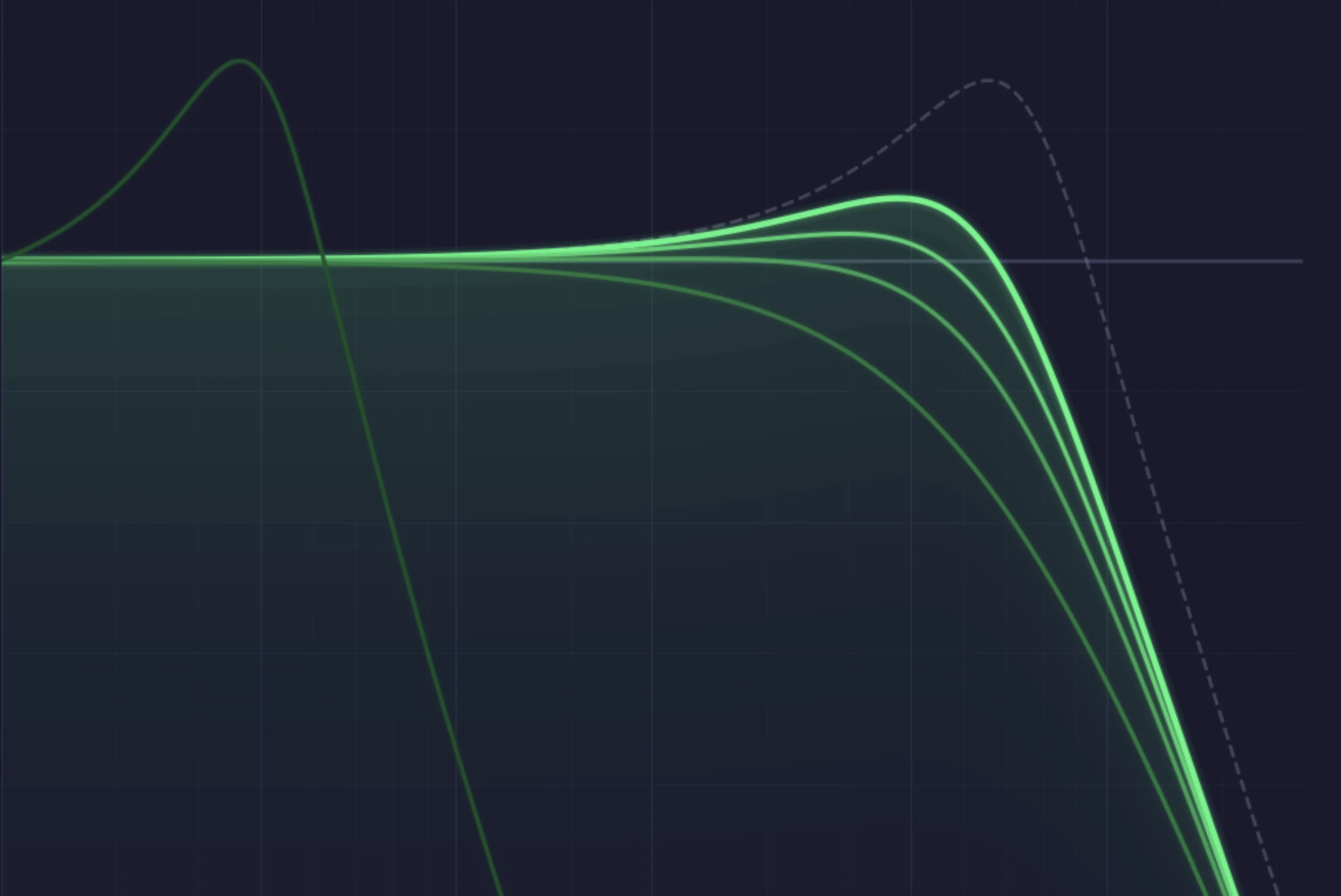
Four Pickups, One Sound: Which Jazz Bass Pickup Gets You There?
You already know what you want to sound like. Four hum-cancelling Jazz Bass pickups, mapped across three playing modes, with the charts to show which one gets closest to your target.
Read →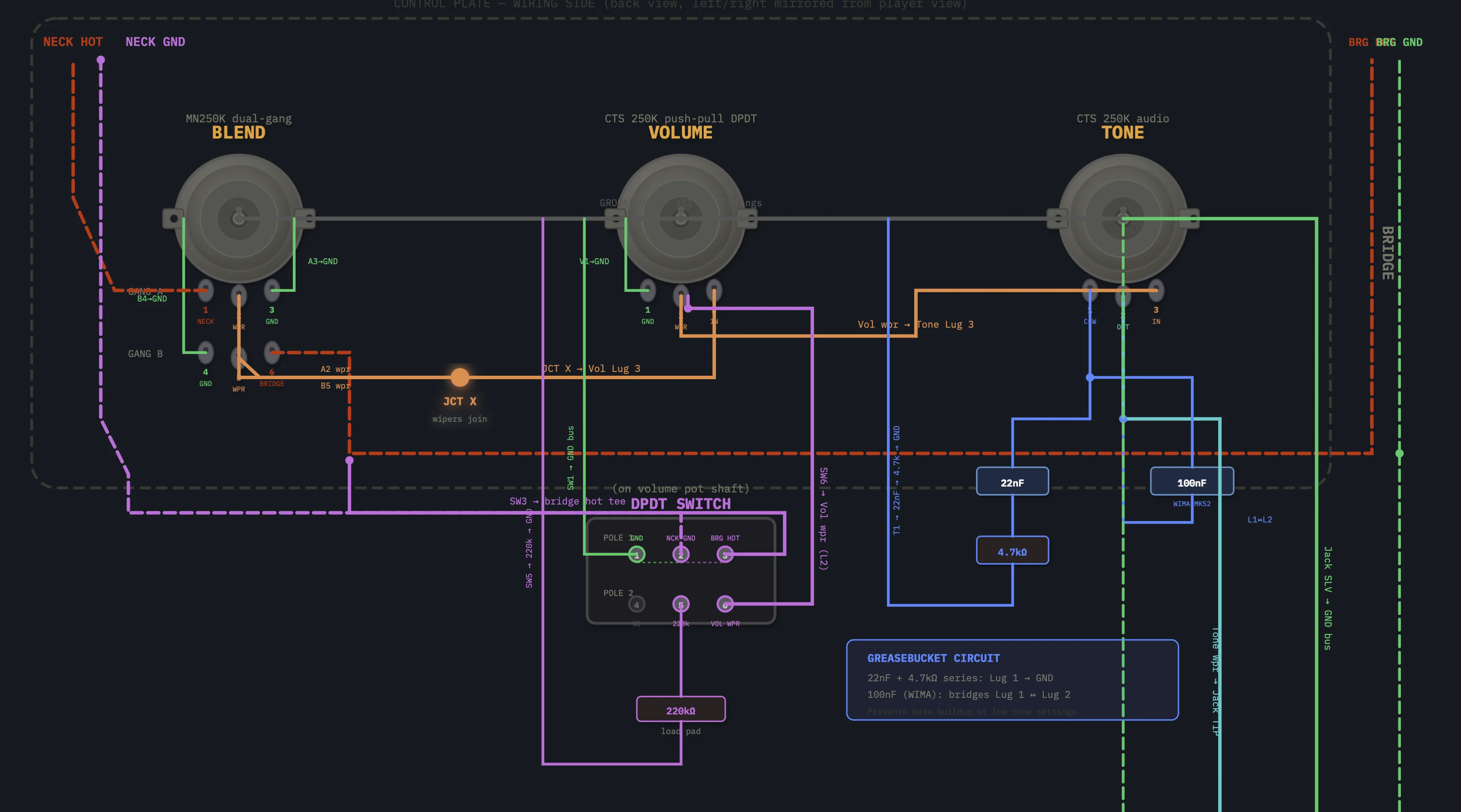
Jazz Bass Master Harness: Volume · Q · Blend + Series/Parallel + Phantom Buffer
A Jazz Bass harness with series/parallel switching, a passive Q-filter bark dial in place of the tone control, and a phantom-powered ring-hot buffer. Three knobs, no tone pot, cable-immune. Built for Fralin Split Jazz. Every solder joint numbered.
Read →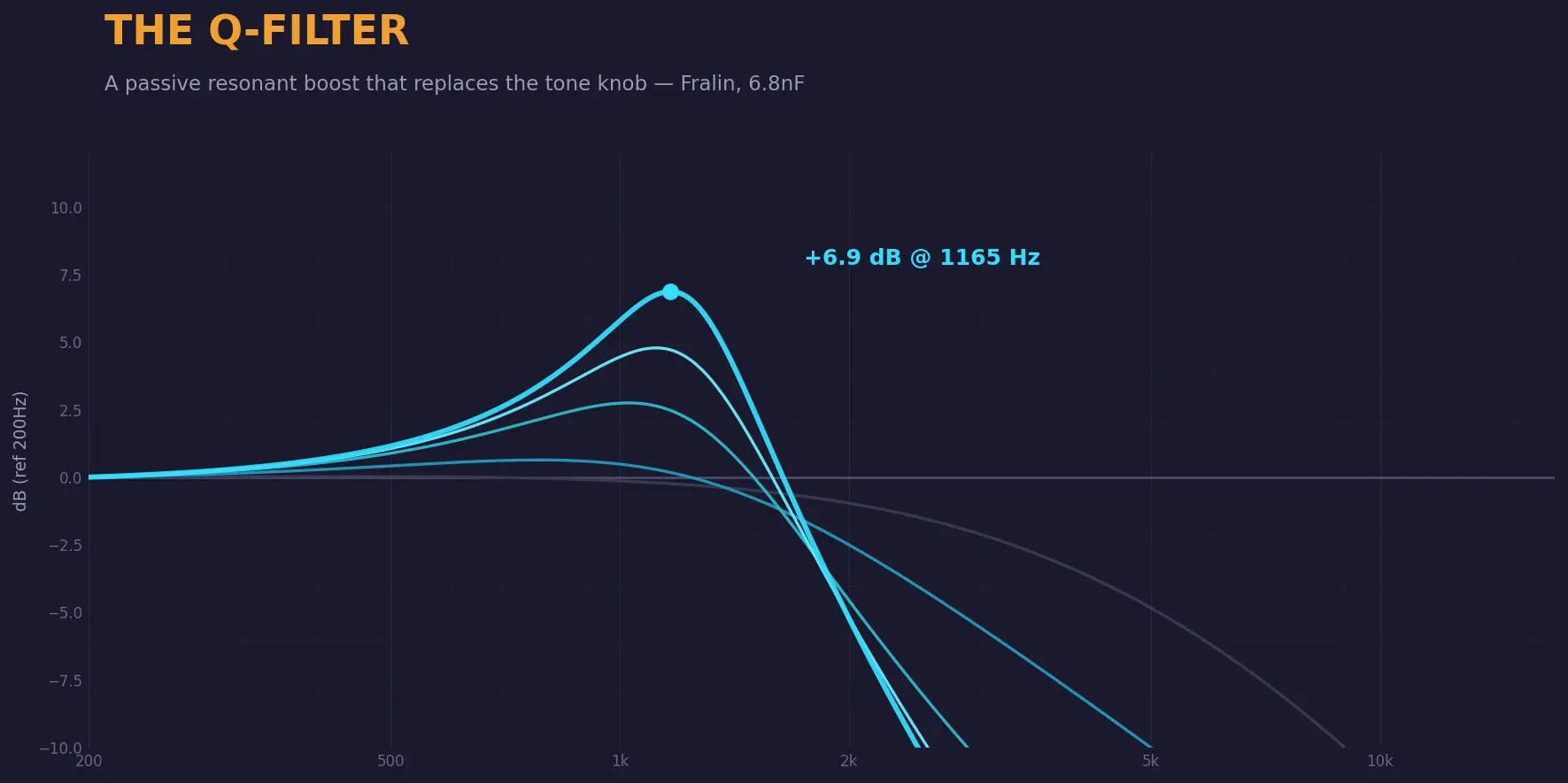
The Q-Filter Build: A Passive Bark Dial That Replaces the Tone Knob
A Jazz Bass harness with no tone pot. In its place: a no-load pot that opens the pickup wide at one end and drags its resonant peak down into P-bass bark at the other. One knob, one cap, no battery.
Read →